Understanding Loan Deals: 5 Strategic Loan-to-Buy Options for 2026
Advertisements
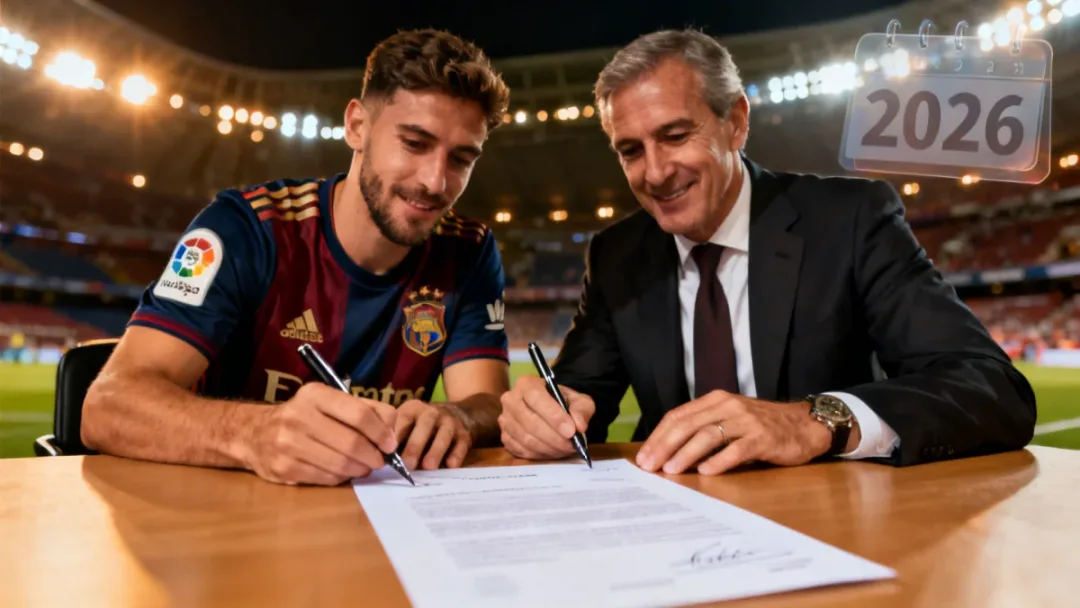
European football clubs are increasingly leveraging sophisticated loan-to-buy options to manage transfer budgets and acquire talent, with five strategic models gaining prominence for the 2026 transfer window.
The landscape of European football transfers is constantly evolving, with financial fair play regulations and increasing player valuations pushing clubs to innovate. As we look towards the 2026 transfer window, loan-to-buy options 2026 are emerging as a critical strategic tool for clubs aiming to secure talent while maintaining financial flexibility. These deals allow clubs to mitigate risk, spread costs, and evaluate players before making a permanent commitment, becoming an indispensable part of modern squad building.
The Evolution of Loan Deals in European Football
Loan deals have long been a feature of football, offering temporary solutions for player development or squad depth. However, their complexity and strategic importance have grown significantly. What was once a simple temporary move has transformed into a sophisticated financial instrument, particularly with the rise of loan-to-buy clauses. These clauses provide a bridge between immediate need and future investment, allowing clubs to test the waters before diving into a full transfer.
The increasing financial pressures on clubs, exacerbated by global economic shifts and heightened competition for top players, have made these arrangements more attractive. Clubs can defer significant transfer fees, spreading the financial burden over several years, which is crucial for managing cash flow and adhering to strict financial regulations. This evolution reflects a broader trend in professional sports towards more flexible and financially prudent player acquisition strategies.
Financial Fair Play and Loan Markets
The impact of Financial Fair Play (FFP) rules cannot be overstated in the prevalence of loan-to-buy options. FFP aims to prevent clubs from spending more than they earn, thus encouraging financial stability. Loan deals, especially those with deferred payment structures, offer a workaround that aligns with FFP objectives by allowing clubs to acquire players without immediately impacting their profit and loss statement with a large transfer fee.
- Risk Mitigation: Clubs can assess a player’s performance, fitness, and adaptation to the team and league before committing to a substantial transfer fee.
- Budget Flexibility: Spreading transfer costs over multiple fiscal years helps clubs remain compliant with FFP regulations and manage their annual budgets more effectively.
- Squad Depth: Loans provide an immediate solution for squad gaps without requiring a long-term financial commitment, ideal for injury cover or short-term tactical needs.
The strategic use of loan deals is not just about finances; it’s also about player development. Young talents often benefit from loan spells to gain first-team experience, while established players might move on loan to rediscover form or secure more playing time. This symbiotic relationship between financial prudence and sporting development underscores the growing importance of these mechanisms.
Mandatory Purchase Options: A Deeper Commitment
One of the most common and structurally significant loan-to-buy options is the mandatory purchase clause. This agreement stipulates that the loaning club must buy the player outright once certain conditions are met, or automatically at the end of the loan period. These conditions are typically sporting, such as the club avoiding relegation, the player making a specific number of appearances, or the club qualifying for a European competition. The mandatory nature of the clause transforms what appears to be a temporary move into a guaranteed future transfer, providing certainty for both clubs and the player involved.
From the selling club’s perspective, a mandatory purchase option offers security. They know they will receive the transfer fee, albeit at a later date, and can plan their finances accordingly. For the buying club, it’s a way to spread the financial outlay over two fiscal years, which can be crucial for FFP compliance and budget management. It’s a calculated risk, but one that many top European clubs are willing to take for high-priority targets.
How Mandatory Purchase Options Work
These clauses are meticulously drafted, with specific triggers that automatically convert the loan into a permanent transfer. For instance, a deal might state that if a player plays 20 games for the loaning club, the purchase becomes mandatory. This structure essentially functions as a delayed transfer, where the initial loan acts as a probationary period or a way to spread payments.
- Clear Conditions: The terms for the purchase to become mandatory are explicitly defined in the contract, leaving little room for ambiguity.
- Financial Planning: Both clubs can plan their future finances with greater certainty, as the transfer fee is guaranteed if conditions are met.
- Player Integration: Players often integrate more fully into the squad, knowing their future is likely with the loaning club.
The mandatory purchase option is particularly favored when a club is confident in a player’s ability but needs to defer the financial impact. It allows them to secure a player who might otherwise be out of reach in a direct transfer window, demonstrating a blend of ambition and financial pragmatism.
Conditional Purchase Options: Performance-Based Acquisitions
Distinct from mandatory clauses, conditional purchase options provide more flexibility, as the obligation to buy is contingent on a set of performance or achievement-based criteria. These conditions are typically more open-ended and can include individual player statistics, team performance metrics, or even the player’s desire to make the move permanent. This model offers a ‘try before you buy’ approach with an added layer of evaluation, making it a popular choice for clubs seeking to minimize risk on promising but unproven talents, or those returning from injury.
For the acquiring club, this structure is less committal than a mandatory purchase. If the player doesn’t perform as expected, or if the team’s circumstances change, they are not obligated to complete the transfer. This safeguards the club’s investment and prevents them from being stuck with a costly player who doesn’t fit into their long-term plans. It’s a testament to the increasing sophistication of transfer negotiations, where every variable is considered to protect the club’s interests.
Examples of Conditional Triggers
Conditional clauses can be incredibly varied and tailored to specific situations. A common trigger might be the player scoring a certain number of goals or assists, or the team achieving a particular league position. Other conditions could relate to the player’s health, ensuring they remain fit for a defined period, or even a mutual agreement between the player and the club to make the move permanent.
- Player Performance: The most common condition, tying the purchase to the player’s individual output or contribution.
- Team Achievements: Conditions linked to the club’s success, such as qualifying for the Champions League or winning a domestic trophy.
- Mutual Consent: A less common but occasionally used condition where both player and club must agree to activate the purchase option.
This type of deal requires careful monitoring and clear communication between all parties. The success of a conditional loan-to-buy hinges on transparent terms and a shared understanding of what constitutes a successful outcome. It represents a balanced approach to talent acquisition, blending opportunity with caution.
Loan with Option to Buy: Maximum Flexibility for Clubs
The loan with an option to buy provides the highest degree of flexibility for the acquiring club. Unlike mandatory or conditional clauses, there is no obligation whatsoever to complete the transfer. The club simply holds the right, but not the duty, to purchase the player at a pre-agreed price at the end of the loan spell. This model is often preferred when a club wants to thoroughly assess a player without any long-term commitment pressure, or when they are uncertain about their future financial or sporting direction.
This option is particularly attractive for clubs facing uncertain financial futures or those who want to scout a player extensively in a competitive environment before committing significant funds. It allows them to evaluate not just the player’s on-field performance, but also their adaptability, personality, and integration into the team culture. It’s the ultimate ‘no-strings-attached’ approach to player acquisition.
Strategic Advantages of Option-to-Buy Deals
For the loaning club, the primary advantage is the ability to thoroughly evaluate a player before making a permanent decision. This can be crucial for younger players who need time to develop, or for players returning from long-term injuries who need to prove their fitness and form. It also allows clubs to react quickly to market opportunities without immediately depleting their transfer budget.
- Full Evaluation: Provides ample time to assess a player’s suitability for the club without financial obligation.
- Budget Control: Allows clubs to keep their transfer budget flexible until a definite decision is made.
- Market Responsiveness: Enables clubs to capitalize on short-term opportunities in the transfer market.
While offering maximum flexibility, this option can sometimes create uncertainty for the player, who might prefer a more definitive future. However, for many, the opportunity to play at a higher level or secure regular first-team football outweighs the temporary uncertainty, making it a viable and popular choice across Europe.
Deferred Payment Loan Deals for 2026
Beyond the typical loan-to-buy structures, European clubs are increasingly exploring deferred payment loan deals, specifically for the 2026 window. These arrangements involve an initial loan period, but the agreed-upon transfer fee is paid in installments over an extended period after the loan converts to a permanent move. This strategy is primarily driven by financial considerations, allowing clubs to manage large transfer fees without a significant immediate impact on their balance sheets. It’s a sophisticated way to spread financial risk and align with long-term budgeting strategies.
This model is particularly attractive for acquiring high-value players where the outright purchase price might strain a club’s immediate finances. By deferring payments, clubs can secure top talent now while planning for payments in future fiscal years, potentially leveraging future revenues or player sales. It requires meticulous financial planning and strong trust between the selling and buying clubs, as the payment schedule can extend for several years post-transfer.
Deferred payment loan deals are becoming more common in the upper echelons of European football, where transfer fees for elite players can easily exceed €50 million. The ability to structure these payments over three, four, or even five years after the loan period concludes offers unparalleled financial maneuverability. It’s a win-win for clubs that need to upgrade their squad but are bound by FFP or internal budget constraints.
The Mechanics of Deferred Payment
The core principle is simple: a player moves on loan, and if the loan converts to a permanent transfer (either mandatory, conditional, or optional), the agreed-upon fee is paid in pre-determined installments. This differs from standard transfer installment payments only in that the initial phase is a loan, delaying the start of the payment schedule. The terms often include interest rates or performance-related bonuses tied to the deferred payments.
- Extended Payment Horizon: Allows clubs to spread out large transfer fees over several years, past the initial loan period.
- Financial Stability: Helps clubs maintain a healthy cash flow and adhere to financial regulations without compromising on talent.
- High-Value Acquisitions: Facilitates the acquisition of elite players who might otherwise be financially inaccessible.
Executing these deals effectively requires expert negotiation and legal counsel to ensure all terms are clear and enforceable. The deferred payment loan deal is a testament to the innovative financial engineering now commonplace in the world of professional football transfers, especially as clubs prepare for the economic realities of 2026.
Strategic Player Development Loans: Beyond Finances
While financial considerations often dominate discussions around loan deals, strategic player development loans represent a distinct category focused primarily on nurturing talent. These aren’t necessarily loan-to-buy in the traditional sense, but often include an option to buy that may or may not be exercised. The primary goal for the parent club is to provide their promising young players with consistent first-team football and experience that they might not get in their current squad. For the loaning club, it’s an opportunity to acquire high-potential talent, often at a reduced cost, to bolster their squad for a season or two.
These loans are meticulously planned, with clear objectives for the player’s development. The parent club often maintains close contact, monitoring the player’s progress, fitness, and integration. It’s a long-term investment in a player’s career, with the hope that they either return to become a key part of the parent club’s future or increase their market value for a profitable sale down the line. For the player, it’s a chance to accelerate their growth and prove their worth in a competitive environment, making it a crucial step in their professional journey.
The Dual Benefit of Development Loans
The benefits of strategic player development loans are twofold. The parent club gains a more experienced and refined player, while the loaning club gets access to talent that might be above their usual budget. This symbiotic relationship fosters a robust ecosystem within football, where talent can flow efficiently to where it is most needed for growth.
- Accelerated Growth: Young players gain invaluable first-team experience and exposure to different tactical systems.
- Scouting and Talent Identification: Loaning clubs can scout potential permanent acquisitions over an extended period.
- Network Building: Fosters stronger relationships between clubs, potentially leading to future transfer collaborations.
While the option to buy might be present, it’s often secondary to the development aspect. These loans are about creating future stars, whether for the parent club or for the wider football market. They highlight a forward-thinking approach to squad management, prioritizing long-term success over immediate financial gains.
The Future Impact of Loan-to-Buy Strategies in 2026
As we approach 2026, the strategic importance of loan-to-buy options is set to grow even further. Clubs will continue to face economic pressures, evolving FFP regulations, and intense competition for top talent. These flexible transfer mechanisms offer a vital toolkit for navigating these challenges, allowing clubs to build competitive squads sustainably. The ability to defer payments, mitigate risk, and evaluate players thoroughly before committing significant capital will be paramount for success in the transfer market.
The trend towards more complex and nuanced loan deals reflects a maturation of football’s financial and strategic operations. We are moving beyond simple outright purchases towards a more intricate web of agreements that prioritize long-term planning and risk management. This shift is not just about avoiding immediate financial strain but also about building more resilient and adaptable club structures that can weather the unpredictable nature of modern football.
Key Considerations for Clubs in 2026
Clubs entering the 2026 transfer window will need to be highly adept at negotiating and structuring these deals. Legal expertise, financial acumen, and a deep understanding of player valuations will be more critical than ever. The focus will be on crafting agreements that serve both immediate sporting needs and long-term financial health, ensuring sustainability and competitiveness.
- Adaptability: Clubs must be prepared to adapt their transfer strategies to market conditions and regulatory changes.
- Negotiation Skills: The ability to craft intricate loan-to-buy agreements will be a key differentiator.
- Long-Term Vision: Successful clubs will integrate loan strategies into a broader, multi-year squad building plan.
Ultimately, the continued evolution of loan-to-buy strategies underscores a fundamental truth in modern football: success on the pitch is inextricably linked to smart, strategic management off it. These deals are not just financial instruments; they are critical components of a holistic approach to building and maintaining a top-tier football club in 2026 and beyond.
| Loan Deal Type | Key Characteristic |
|---|---|
| Mandatory Purchase | Purchase becomes automatic upon meeting specific, pre-defined conditions or end of loan. |
| Conditional Purchase | Obligation to buy is contingent on performance-based or achievement-based criteria. |
| Option to Buy | Club holds the right, but not the obligation, to purchase the player. |
| Deferred Payment Loan | Transfer fee paid in installments over an extended period after loan conversion. |
Frequently Asked Questions About Loan-to-Buy Deals
What is a loan-to-buy option in football transfers?▼A loan-to-buy option allows a club to acquire a player on a temporary basis with a clause to make the move permanent later. This provides flexibility, enabling clubs to assess a player’s suitability, manage finances, and defer transfer fees, becoming a strategic tool in modern football transfers.
How do mandatory purchase options differ from conditional ones?▼Mandatory purchase options obligate a club to buy a player if specific, often simple, conditions are met (e.g., end of loan). Conditional options, however, depend on more complex performance-based or achievement-based criteria, offering more flexibility and less immediate commitment for the acquiring club.
Why are deferred payment loan deals becoming popular for 2026?▼Deferred payment loan deals are gaining traction as they allow clubs to spread large transfer fees over several years, even after the loan period. This helps manage financial fair play regulations, improves cash flow, and enables the acquisition of high-value players without immediate budget strain, crucial for 2026 planning.
What are the benefits of a loan with an option to buy?▼This option offers maximum flexibility, as the loaning club has the right, but no obligation, to purchase the player. It allows for thorough evaluation of a player’s performance, adaptation, and cultural fit without immediate financial commitment, safeguarding the club’s investment and maintaining budget control.
How do loan-to-buy options impact player development?▼Loan-to-buy options, particularly strategic development loans, are crucial for player growth. They provide young talents with essential first-team experience and regular playing time, accelerating their development. This exposure can either prepare them for a role at the parent club or increase their market value for a future transfer.
Conclusion
The strategic use of loan-to-buy options is no longer a peripheral aspect of football transfers but a central pillar of squad building for European clubs, especially as they look towards the 2026 transfer window. From mandatory and conditional clauses to flexible options and intricate deferred payment structures, these mechanisms offer vital tools for managing financial realities, mitigating risks, and securing top talent. As the game continues to evolve, the ability to creatively leverage these complex agreements will define the success of many clubs in an increasingly competitive and financially regulated environment. The future of transfers is clearly leaning towards more adaptive and financially intelligent strategies, with loan-to-buy options leading the charge.