Beyond the Headlines: 6 Lesser-Known Transfer Clauses Shaping 2026
Advertisements
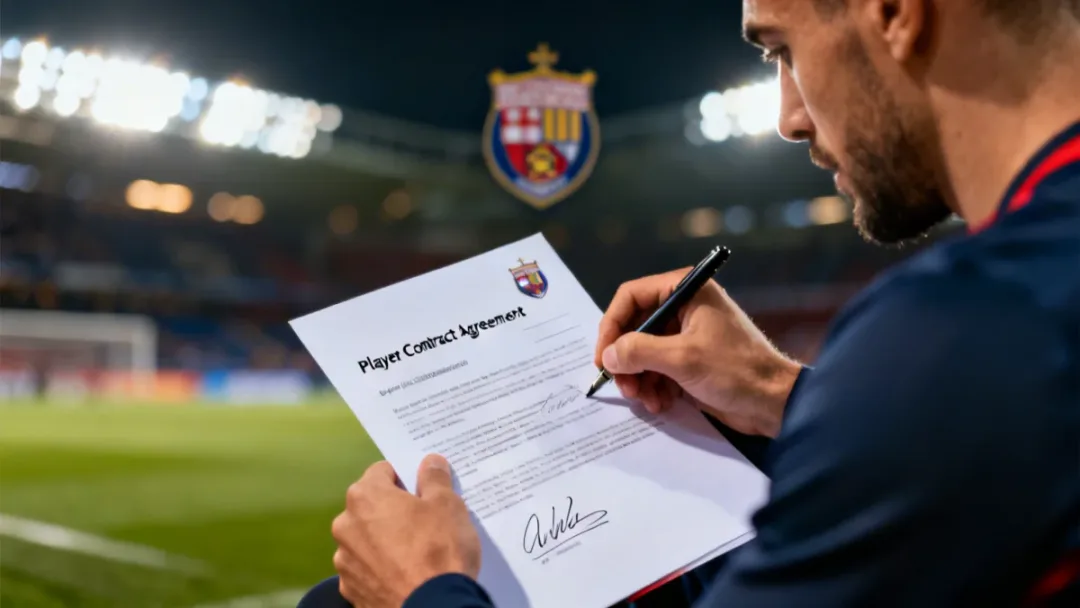
Beyond the standard transfer fees, specific, often overlooked, contractual clauses are poised to significantly alter player movement dynamics in the 2026 football transfer window.
In the high-stakes world of professional football, transfer dealings often dominate headlines, focusing primarily on astronomical fees and star players. However, beneath this visible layer of negotiation lies a complex web of contractual intricacies. Understanding these often-overlooked agreements is crucial to comprehending the true mechanics of player movement. This article delves into Beyond the Headlines: 6 Lesser-Known Transfer Clauses That Could Affect Player Movement in 2026, offering a unique perspective on how these subtle yet powerful provisions could reshape squads and careers in the upcoming transfer windows.
The Intricacies of Option-to-Buy Clauses
Option-to-buy clauses are a common feature in loan deals, granting the borrowing club the right to make the move permanent for a predetermined fee. While seemingly straightforward, their implementation and impact can be surprisingly nuanced, especially when tied to specific performance metrics or team achievements. These clauses offer flexibility but also introduce an element of strategic waiting and financial planning for clubs.
The strategic advantage of an option-to-buy lies in risk mitigation. A club can assess a player’s suitability, fitness, and integration into the team without committing to a full transfer fee upfront. This ‘try before you buy’ approach is increasingly popular in a volatile market where every investment carries significant weight.
Conditional Option Triggers
Many option-to-buy clauses are not automatic but depend on specific conditions being met. These conditions can range from the number of appearances a player makes to team performance, such as avoiding relegation or qualifying for a European competition. Such triggers add layers of complexity, as both the player’s agent and the clubs involved must constantly monitor these benchmarks.
- Appearance Thresholds: Often set at a certain number of games or minutes played.
- Team Performance: Linked to league position, cup success, or European qualification.
- Player Performance: Less common, but can include goal tallies or assists.
The financial implications of these clauses extend beyond the initial loan fee. Clubs must budget for potential permanent transfers, even if uncertain, creating a delicate balance between current financial health and future strategic investments. As 2026 approaches, many such clauses from 2025 loan deals will come to fruition, dictating significant player movements.
The Power of Buy-Back and Sell-On Clauses
Buy-back and sell-on clauses are mechanisms that allow selling clubs to retain a future interest in a player’s career. These clauses are particularly prevalent when young, promising talents are transferred, offering the original club a safety net or a share in future profits. While not always headline-grabbing, their long-term financial and strategic impact can be substantial.
For clubs developing youth, these clauses are invaluable. They provide a means to recoup investment or even reacquire a player who has developed significantly elsewhere. This ensures that a club’s talent pipeline can continue to yield returns, even if a player moves on early in their career.
Strategic Buy-Back Options
A buy-back clause grants the selling club the right to repurchase a player for a pre-agreed fee. This is often seen when a top club sells a promising youngster to a smaller team for more game time, with the intention of bringing them back once they have matured. These clauses can significantly disrupt the plans of the buying club, potentially forcing them to sell a key player.
- Pre-determined Fee: The buy-back price is fixed at the time of the initial transfer.
- Time-Sensitive: Often includes a window (e.g., within the next two seasons) during which the clause can be activated.
- Player Consent: While the clause gives the original club the right to buy, the player typically still has to agree to the move.
Sell-on clauses, on the other hand, entitle the original club to a percentage of any future transfer fee if the player is sold again. This provides a continuous revenue stream and acknowledges the developmental role the initial club played. These clauses can become incredibly lucrative if a player’s value skyrockets.
Release Clauses vs. Minimum Fee Release Clauses
The terms ‘release clause’ and ‘minimum fee release clause’ are often used interchangeably, but there are subtle yet important distinctions in practice. Both allow a player to depart if a specific fee is met, but the context and negotiation around them can differ significantly. These clauses are player-centric, offering a direct route out of a contract without protracted club negotiations, provided the fee is paid.
For players, these clauses represent a degree of control over their careers, especially if they are looking to move to a bigger club or a more competitive league. For clubs, they are a double-edged sword: they can attract top talent by offering an exit route, but they also risk losing key players if the clause is activated.
Mandatory Release Clauses
In some leagues, notably Spain’s La Liga, release clauses are mandatory for all professional contracts. This means every player has a specified fee in their contract that, if paid, obligates the club to release them. These are non-negotiable once set and can lead to dramatic, swift transfers if a suitor is willing to meet the figure.
Minimum fee release clauses, common in other major European leagues, are similar but might be negotiated differently. They are not always mandatory and can be strategically set at a very high price to deter potential suitors, effectively safeguarding the player’s future at the club unless an extraordinary offer arrives. The fee is a floor, not necessarily the exact amount. As 2026 approaches, the activation of certain clauses could lead to unexpected high-profile moves, especially for players whose market value has outstripped their contractual release fee.
Performance-Based Incentives and Escalators
Beyond the base transfer fee, many deals include a myriad of performance-based clauses that can significantly increase the total cost of a player over time. These clauses are designed to align the financial interests of the selling club with the success of the player at their new team. They often involve complex calculations and benchmarks, making them less visible but highly impactful.

These incentives provide a way for selling clubs to benefit from a player’s continued development and success. For buying clubs, they spread out the financial commitment, making large transfers more manageable by tying payments to tangible achievements.
Achievable Milestones
These incentives can be tied to individual player achievements or team success. Common examples include:
- Individual Goals/Assists: Specific targets for offensive players.
- Clean Sheets: Often for goalkeepers or defenders.
- Team Trophies: Winning domestic leagues, cups, or European competitions.
- International Caps: Earning call-ups or playing a certain number of games for their national team.
Escalator clauses, a specific type of performance incentive, dictate that a player’s salary or future transfer fee will increase if certain conditions are met. For example, a player’s wages might automatically rise if the team qualifies for the Champions League, or their release clause could increase after a certain number of appearances. These clauses are designed to protect both the player’s value and the club’s investment, adapting to evolving circumstances and performance levels ahead of 2026.
The Impact of Loyalty Bonuses and Image Rights Clauses
While not directly tied to transfer fees, loyalty bonuses and image rights clauses play a crucial role in player movement by influencing a player’s decision to stay or move. Loyalty bonuses are financial rewards for fulfilling the terms of a contract, discouraging early departures. Image rights, on the other hand, represent a significant revenue stream for players and can be a major point of contention in contract negotiations.
For players, a loyalty bonus can be a powerful incentive to see out their contract, especially if they are performing well. For clubs, it’s a cost-effective way to retain key talent without constantly renegotiating salaries.
Navigating Image Rights
Image rights pertain to a player’s commercial value and how their likeness, name, and image can be used for marketing and endorsement purposes. These rights are often split between the player and the club, or sometimes a third-party agency. The negotiation of image rights can be incredibly complex, often involving separate legal entities and significant financial sums.
- Player’s Share: Percentage of revenue generated from their image.
- Club’s Share: Rights to use the player’s image for club marketing.
- Third-Party Involvement: Agencies specializing in managing and monetizing image rights.
Disputes over image rights can complicate transfers, as potential buying clubs must agree on the existing arrangements or negotiate new ones. Similarly, loyalty bonuses can influence whether a player pushes for a move, especially if a significant bonus is due in 2026, making them less inclined to leave before then.
Agent Fees and Intermediary Clauses
The role of agents and intermediaries in football transfers is often shrouded in mystery and controversy, yet their contractual clauses are integral to any deal. These clauses dictate how agents are compensated, often through a percentage of a player’s salary or the transfer fee. While not directly affecting player movement, the financial demands of agents can certainly influence a club’s willingness to pursue a transfer.
Agents are crucial facilitators, connecting players with clubs and navigating complex negotiations. However, their fees can add a substantial hidden cost to transfers, which clubs must factor into their overall financial planning.
Transparency and Regulation
There’s a growing push for greater transparency and regulation regarding agent fees. FIFA has attempted to implement caps on agent commissions, but these efforts have faced legal challenges. Despite this, clubs are becoming more scrutinizing of agent clauses, especially in light of increasing financial fair play regulations.
- Commission Percentage: Typically a percentage of the player’s salary or transfer fee.
- Payment Structure: Can be a lump sum or paid in installments over the contract duration.
- Success Fees: Additional payments contingent on the player or club achieving certain milestones.
The financial burden of agent fees can be substantial, sometimes making or breaking a transfer. As clubs look to optimize their spending in 2026, the negotiation of these intermediary clauses will remain a critical, albeit often unseen, aspect of the transfer market. Understanding how these fees are structured and regulated is key to appreciating the full cost of acquiring a player.
| Key Transfer Clause | Brief Description |
|---|---|
| Option-to-Buy | Grants borrowing club right to purchase player for pre-agreed fee, often conditional on performance. |
| Buy-Back Clause | Allows original selling club to repurchase a player for a fixed fee. |
| Sell-On Clause | Entitles original club to a percentage of any future transfer fee. |
| Release Clause | Player can leave if a specific, pre-agreed fee is paid to the club. |
Frequently Asked Questions About Transfer Clauses
What is the primary difference between a release clause and a minimum fee release clause?▼While both allow a player to leave for a specific fee, mandatory release clauses (like in La Liga) oblige clubs to release the player upon payment. Minimum fee release clauses, common elsewhere, set a floor for negotiations but don’t always mandate the transfer, offering clubs more leverage.
How do performance-based incentives affect a transfer’s total cost?▼Performance-based incentives, such as bonuses for goals, appearances, or team trophies, can significantly increase the total transfer fee over time. They are paid out only if specific milestones are achieved, spreading the financial commitment and aligning club interests.
Why are buy-back clauses important for selling clubs?▼Buy-back clauses allow a selling club to repurchase a player they previously developed, often at a pre-agreed fee. This is crucial for clubs nurturing young talent, offering a safety net and the chance to reacquire a player who has significantly improved elsewhere.
What role do image rights play in player transfers?▼Image rights, which cover a player’s commercial usage, are a significant revenue stream and a complex negotiation point. Disputes over their ownership and monetization can complicate or even derail transfers, as clubs and players vie for control over this valuable asset.
How do agent fees impact a club’s transfer strategy?▼Agent fees, typically a percentage of a player’s salary or transfer fee, add a substantial hidden cost to transfers. Clubs must factor these into their budgets, and high agent demands can influence their willingness to pursue certain players, impacting overall transfer strategy.
Conclusion
The world of football transfers is far more intricate than often portrayed in mainstream media. While headline figures grab attention, it is the lesser-known clauses – from conditional option-to-buy agreements to complex image rights and agent fees – that truly shape the landscape of player movement. As we look towards 2026, understanding these subtle yet powerful contractual elements will be key to anticipating the strategic decisions of clubs and the career trajectories of players. These clauses, often negotiated in the shadows, are the unsung heroes and silent disruptors of the beautiful game, dictating who goes where and for how much, impacting team dynamics and league standings in profound ways.