European League Playoff Formats: A U.S. Fan’s 2026 Guide
Advertisements

This guide simplifies how European football leagues structure their playoff systems for the 2026 season, providing U.S. fans with essential insights into qualifications, knockout stages, and championship deciders across various top-tier competitions.
For U.S. fans diving deeper into the thrilling world of European football, comprehending the intricate world of European playoff formats for the 2026 season can be a game-changer. Beyond the regular season, many leagues employ exciting playoff structures to crown champions, determine promotions, or decide European competition spots. This guide is designed to demystify these systems, offering clarity and enhancing your viewing experience.
The Basics of European Playoff Systems
European football leagues, unlike many American sports, traditionally rely on a straight league table for their primary championship. The team with the most points at the end of the season is crowned champion. However, this simplicity often gives way to complex playoff scenarios for other crucial outcomes, such as qualification for prestigious European club competitions (like the UEFA Champions League or Europa League), promotion to a higher division, or avoiding relegation to a lower one. These playoff systems add an extra layer of drama and excitement, often leading to unforgettable moments.
Understanding these variations is key to appreciating the full scope of European football. While some top-tier leagues might not have a direct playoff for the championship title itself, their lower divisions or specific qualification routes often feature thrilling knockout stages. These include multi-leg ties, single-match finals, and mini-tournaments, each with its unique flavor and strategic implications. The 2026 season promises to deliver its share of these high-stakes encounters.
In essence, European playoff systems are designed to provide a fair and exciting conclusion to various competitive objectives beyond the league title. They transform the end of the season into a series of decisive battles, where every goal, every save, and every tactical decision can mean the difference between glory and disappointment. Familiarizing yourself with these structures will undoubtedly deepen your appreciation for the tactical and emotional depth of European football.
Premier League and Championship Promotion Play-offs
While the English Premier League crowns its champion based purely on league standing, the EFL Championship, England’s second tier, offers one of the most compelling playoff systems in European football for promotion to the top flight. This particular playoff captures the imagination of millions, often dubbed the ‘richest game in football’ due to the immense financial boost promotion brings.
The Championship playoff involves the teams finishing from third to sixth place in the league table. The third-placed team plays the sixth-placed team, and the fourth-placed team plays the fifth-placed team in two-legged semi-finals. The winners then progress to a single-match final held at Wembley Stadium. This format ensures intense competition and often produces underdog stories, adding significant drama to the end of the season.
The Road to Wembley: Key Stages
- Semi-Finals: Two legs, home and away, with aggregate scores determining the winner. Away goals typically do not count in this system, meaning ties go to extra time and penalties if needed.
- The Final: A single, winner-takes-all match at a neutral venue (Wembley Stadium), often considered one of the most high-pressure games in world football.
- Stake: Promotion to the Premier League, with its associated financial windfall and global exposure.
The Championship playoffs are a prime example of how a playoff system can elevate the excitement of a league, providing a clear and dramatic path to the top for multiple teams. For U.S. fans, this offers a direct comparison to knockout tournaments, making it a relatively easy system to follow and enjoy for its sheer intensity and high stakes.
Bundesliga Relegation/Promotion Play-offs
Germany’s Bundesliga, like the Premier League, awards its championship based on league performance. However, it implements a fascinating play-off system to determine promotion and relegation between the Bundesliga and 2. Bundesliga. This structure provides a safety net for some teams and a last-ditch opportunity for others, ensuring a nail-biting conclusion for those involved.
The Bundesliga relegation play-off typically involves the 16th-placed team from the Bundesliga facing the 3rd-placed team from the 2. Bundesliga. These are two-legged ties, with one match played at each team’s home ground. The winner on aggregate score secures or maintains their place in the Bundesliga, while the loser faces the opposite outcome. This system is a high-stakes affair, often showcasing the stark contrast in pressure between two divisions.
The play-offs are critical for both clubs involved. For the Bundesliga team, it’s about survival and avoiding the significant financial and sporting implications of relegation. For the 2. Bundesliga team, it’s a golden opportunity to reach the top flight, often against a more established opponent. The intensity and raw emotion of these matches are palpable, making them a must-watch for any football enthusiast.
Strategic Importance and Fan Impact
- Survival vs. Ambition: The play-off pits a team fighting for survival against one striving for promotion, creating a compelling narrative.
- Home Advantage: The two-legged format ensures both teams get to host a crucial match, maximizing fan engagement and atmosphere.
- Aggregate Score: The winner is decided by the total goals scored over both legs, emphasizing consistent performance.
The Bundesliga’s approach to promotion and relegation via play-offs adds a unique dimension to the end of their seasons, offering a dramatic conclusion for teams on the brink. It highlights the fine margins in professional football and the immense pressure players and clubs face.
Serie A and La Liga: Championship vs. European Qualification
Italy’s Serie A and Spain’s La Liga, much like the Premier League and Bundesliga, traditionally determine their champions and direct European qualification spots solely through league standings. The team atop the table after all matches are played is crowned champion, and subsequent positions dictate entry into the UEFA Champions League, Europa League, and Europa Conference League. However, the absence of a direct championship playoff doesn’t mean a lack of end-of-season drama, especially regarding the battle for European places or to avoid relegation.
While a direct play-off for the scudetto or La Liga title is rare, these leagues can sometimes implement play-off systems for specific scenarios, such as tie-breakers for European qualification or relegation spots if teams are level on points and head-to-head records don’t suffice. These are not standard annual occurrences but rather exceptions to address specific situations, emphasizing the importance of every single point throughout the season.
The focus in these leagues often shifts to the intense competition for the top four spots for Champions League qualification, or the subsequent spots for Europa and Conference League. The financial and prestige benefits of European football are enormous, making these races incredibly tight and dramatic until the very last matchday. This continuous pressure creates a playoff-like atmosphere in itself, albeit spread across multiple teams and weeks.
The European Race: A Season-Long Playoff
- Top Four Battle: Intense competition for UEFA Champions League berths, often decided in the final weeks.
- Europa and Conference League: Teams vie for these spots, offering alternative routes to European glory.
- Relegation Dogfight: The struggle to avoid the bottom three spots is often as compelling as the title race, with points differences being minimal.
For U.S. fans, understanding that the ‘playoff’ in these leagues often plays out over the entire season for European places or survival provides a different perspective on the competitive landscape. Every match, particularly in the latter stages, carries immense weight and significance.
Ligue 1 and Other European Playoff Variations
France’s Ligue 1, similar to Italy and Spain, primarily uses league standings for its champion and European qualification. However, like Germany, they do utilize a play-off for promotion/relegation between Ligue 1 and Ligue 2. This structure provides a crucial pathway for teams to ascend to the top division or fight to retain their status, injecting significant tension into the season’s conclusion.
The Ligue 1 relegation play-off typically involves the 18th-placed team from Ligue 1 playing against the winner of a Ligue 2 play-off (which itself involves teams from 3rd to 5th place in Ligue 2). This multi-stage system ensures that the team promoted is truly deserving and has overcome significant challenges. The two-legged nature of these ties, with home and away fixtures, adds to the drama and allows for strategic adjustments by both teams.
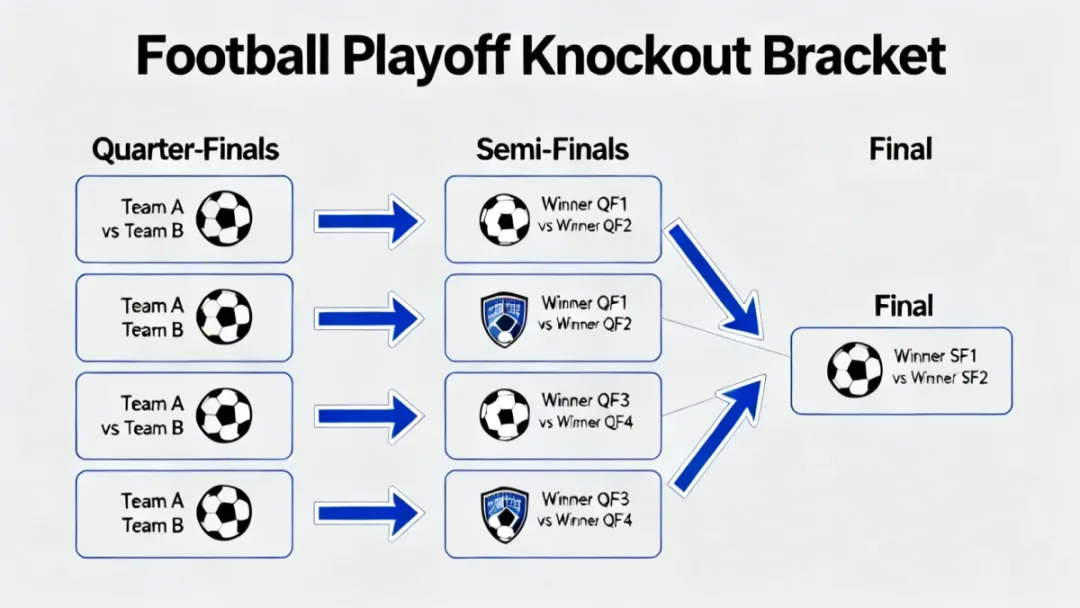
Beyond the major leagues, many smaller European leagues and cup competitions feature various playoff formats. For instance, some leagues might have a championship playoff if the top two teams are tied, or if they opt for a post-season tournament to crown a champion from a group of top finishers. Others use play-offs extensively for European qualification, especially for the lower-ranked European spots.
Diverse Playoff Structures Across Europe
- Championship Play-offs: Some smaller leagues use a post-season tournament or a final series to determine their champion.
- European Qualification Play-offs: Often involve teams finishing just outside the automatic qualification spots, battling for a place in continental competitions.
- Promotion/Relegation Play-offs: A common feature across many European leagues, providing a competitive mechanism for movement between divisions.
These diverse playoff variations across Europe underscore the dynamic nature of football competition. For U.S. fans, exploring these different structures offers a richer understanding of how European football leagues maintain excitement and competitive balance, ensuring that every match, even late in the season, has significant implications.
UEFA Club Competitions Play-off Rounds
While national leagues have their own playoff systems, the UEFA Champions League, Europa League, and Europa Conference League also feature crucial playoff rounds. These are distinct from domestic league play-offs and are designed to determine the final entrants into the group stages of these prestigious continental tournaments. For U.S. fans, these are often the first exposure to European knockout football, showcasing some of the continent’s best teams vying for a place among the elite.
The Champions League, for example, has several qualifying rounds, culminating in a playoff round. Teams that do not automatically qualify for the group stage through their domestic league position must navigate these treacherous ties. These are typically two-legged affairs, with the aggregate score determining which team advances. The pressure is immense, as failure means dropping into the Europa League or even exiting European competition entirely for the season.
Similarly, the Europa League and Europa Conference League feature their own qualification and playoff rounds, providing opportunities for a wider array of clubs from across Europe to participate. These matches are often characterized by passionate atmospheres and unexpected results, as teams from various leagues and with different levels of experience compete for a shot at continental glory. These playoff rounds are critical gateways to the main competitions.
The Continental Gauntlet: Key Features
- Two-Legged Ties: Home and away matches are standard, with aggregate scores deciding progression.
- Away Goals Rule: Historically, away goals have been a crucial tie-breaker, though recent changes by UEFA have removed this rule in extra time.
- High Stakes: Qualification for the group stages brings immense financial rewards and prestige, making these matches incredibly intense.
Understanding these UEFA playoff rounds is essential for U.S. fans to follow the complete journey of European clubs. They represent the initial battleground where dreams of continental glory are forged or shattered, setting the stage for the group stage drama.
Strategies and Impact on Teams and Fans
The existence of various European playoff formats significantly influences team strategies, player performance, and fan engagement. For teams, the approach to a playoff match or series is often vastly different from a regular league game. The stakes are higher, the margins for error are smaller, and tactical flexibility becomes paramount. Coaches must consider aggregate scores, potential extra time, and even penalty shootouts, leading to more cautious or aggressive game plans depending on the situation.
For players, playoffs are often career-defining moments. The pressure to perform in a do-or-die scenario can bring out the best in some, while others may struggle. Mental fortitude, experience in high-pressure situations, and the ability to execute under duress become critical attributes. These matches are where legends are made, and heroes emerge, often creating iconic moments that are remembered for generations.
From a fan perspective, playoffs elevate the emotional intensity of the game. The direct nature of elimination or promotion creates a heightened sense of anticipation and drama. Fans invest emotionally, creating electric atmospheres in stadiums and drawing in massive television audiences. For U.S. fans, these formats offer a familiar structure of knockout competition, making it easier to connect with the passion and excitement that defines European football’s climax.
The Playoff Effect: Beyond the Pitch
- Tactical Adjustments: Coaches often employ more conservative or calculated strategies for two-legged ties.
- Player Psychology: The mental aspect of playing under immense pressure is a significant factor in playoff success.
- Fan Engagement: Play-offs generate incredible atmospheres and foster deep emotional connections between fans and their clubs.
Ultimately, European playoff formats are not just about determining outcomes; they are about amplifying the drama, testing the limits of teams and players, and delivering unforgettable experiences for fans. They are an integral part of what makes European football so captivating.
| Key Playoff Type | Brief Description |
|---|---|
| Championship Promotion | Teams battle for promotion to a higher league, often involving semi-finals and a final. |
| Relegation/Promotion | Lower-placed top-tier teams face higher-placed second-tier teams to determine league status. |
| European Qualification | Teams compete in knockout rounds to secure spots in UEFA Champions League, Europa League, or Conference League. |
| Tie-breaker Play-offs | Rare instances where a single match or short series decides league position if points are equal. |
Frequently Asked Questions About European Playoff Formats
Do all major European leagues have championship playoffs?▼No, most major European leagues like the English Premier League, Spain’s La Liga, and Italy’s Serie A crown their champions based solely on league table standings. Playoff formats are more common for promotion, relegation, or European competition qualification spots, rather than the primary league title itself.
What is the ‘richest game in football’ and which playoff format is it?▼The ‘richest game in football’ refers to the English Championship Play-off Final. The winner secures promotion to the Premier League, which brings a massive financial boost, often exceeding £100 million due to increased broadcasting revenues and commercial opportunities. It’s a single-match final.
How do UEFA club competition playoffs differ from domestic playoffs?▼UEFA club competition playoffs (e.g., Champions League, Europa League) are distinct from domestic playoffs. They determine which teams qualify for the group stages of continental tournaments, often involving teams that didn’t automatically qualify via their league position. Domestic playoffs focus on league-specific outcomes like promotion or relegation.
Are away goals still a factor in European playoff ties?▼For UEFA club competitions, the away goals rule was abolished starting from the 2021-2022 season. This means that if a two-legged tie is level on aggregate after 180 minutes, it proceeds directly to extra time and then penalties, regardless of the number of goals scored away from home.
Why are playoff formats important for U.S. fans to understand?▼Understanding European playoff formats helps U.S. fans appreciate the full competitive landscape of European football. It clarifies how teams achieve promotion, avoid relegation, or qualify for prestigious continental tournaments, adding an exciting, familiar knockout-style drama to the end of the season.
Conclusion
As the 2026 European football season approaches, a deeper understanding of the various playoff formats will undoubtedly enrich the experience for U.S. fans. From the high-stakes promotion battles in England’s Championship to the tense relegation deciders in Germany’s Bundesliga and France’s Ligue 1, and the crucial qualification rounds for UEFA’s continental competitions, these systems add layers of drama and excitement. While not always defining the league champion, playoffs are integral to shaping the competitive landscape, offering thrilling conclusions for promotion, relegation, and European dreams. By familiarizing yourself with these structures, you’re not just watching games; you’re witnessing the culmination of an entire season’s effort, where every moment can lead to triumph or despair, making European football an even more captivating spectacle.