Unlocking European League Dominance: 3 Key Tactical Shifts for 2026
Advertisements

Achieving European League Dominance by 2026 necessitates top clubs adopting advanced tactical shifts, including sophisticated data integration, heightened player versatility, and adaptive high-pressing systems to gain a competitive edge.
The landscape of European football is ever-evolving, demanding constant innovation and adaptation from its elite clubs. To secure European League Dominance by 2026, teams must look beyond conventional strategies and embrace groundbreaking tactical shifts that redefine competitive advantage. This article delves into the crucial adjustments clubs need to make to stay ahead of the curve.
The Rise of Hyper-Adaptive Formations
The era of rigid formations is steadily drawing to a close. Modern football demands a fluidity that allows teams to seamlessly transition between defensive solidity and offensive potency, often within the same passage of play. By 2026, clubs aiming for European League Dominance will prioritize hyper-adaptive formations that can morph based on game state, opponent’s tactics, and even individual player strengths in real-time.
This tactical evolution isn’t merely about switching between a 4-3-3 and a 3-5-2. It involves players understanding complex spatial relationships and responsibilities that change dynamically. Coaches are increasingly focusing on developing players who are not only technically proficient but also tactically intelligent, capable of interpreting subtle cues and adjusting their positioning and roles instantly. This requires intensive training in positional play and game intelligence.
Positional Interchangeability and Role Fluidity
One of the core tenets of hyper-adaptive formations is the concept of positional interchangeability. Players are no longer strictly defined by their starting positions but by the functions they perform across different zones of the pitch. A full-back might invert to become a central midfielder in possession, while a winger could drop deep to create overloads in the midfield or push high to act as a secondary striker.
- Midfield Maestros: Central midfielders are expected to cover vast areas, contributing to both defensive shielding and attacking build-up, often switching between holding and box-to-box roles.
- Inverted Full-backs: These players provide numerical superiority in central areas, aiding ball retention and facilitating quick transitions, while still offering defensive cover.
- False Nines and Hybrid Forwards: Attackers who can drop deep to link play, create space for others, and then burst into the box are invaluable, disrupting traditional defensive marking.
The ability to fluidly change roles and positions disrupts opponent’s marking schemes and creates unpredictable attacking patterns. This tactical flexibility makes it incredibly difficult for rival teams to establish a stable defensive structure or press effectively, as the reference points for their marking constantly shift. Clubs that master this will hold a significant advantage.
Data-Driven Positional Optimization
The implementation of hyper-adaptive formations is heavily supported by advanced data analytics. Coaches use sophisticated metrics to identify optimal player combinations and transition triggers. Performance data helps in understanding how different player profiles interact within a fluid system and how to best utilize their attributes in various game scenarios. This scientific approach ensures that tactical shifts are not random but calculated decisions based on empirical evidence.
In conclusion, the future of European League Dominance hinges on clubs moving beyond static systems towards formations that are inherently adaptable and fluid. This tactical philosophy demands highly intelligent and versatile players, supported by comprehensive data analysis, to create an unpredictable and dominant force on the pitch.
Leveraging Advanced Data Analytics for Micro-Tactics
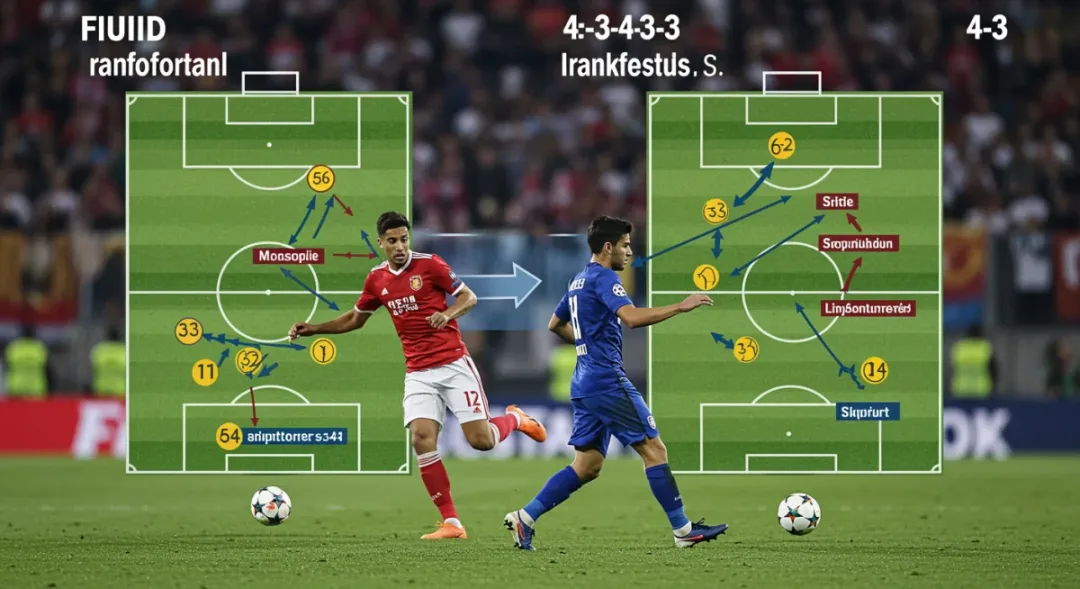
In the pursuit of European League Dominance, the role of data analytics has transcended basic statistics, moving into the realm of micro-tactics. By 2026, top clubs will be using hyper-granular data to inform every aspect of their game plan, from individual player conditioning to opponent-specific tactical adjustments. This isn’t just about identifying trends; it’s about predicting outcomes and optimizing every single action on the field.
Micro-tactics, informed by advanced analytics, involve breaking down the game into minute details. This includes analyzing passing angles, defensive block compactness, pressing triggers, and even individual player decision-making under pressure. Clubs are investing heavily in dedicated analytics departments, employing data scientists and performance analysts who can translate complex data into actionable insights for the coaching staff.
Predictive Analytics for Opponent Weaknesses
One of the most significant advancements is the use of predictive analytics to uncover subtle weaknesses in opposing teams. By analyzing historical data, movement patterns, and statistical probabilities, clubs can identify specific scenarios where an opponent is most vulnerable. This allows for highly targeted tactical plans designed to exploit these precise weaknesses.
- Pressing Traps: Data can reveal specific passing lanes or player tendencies that, when targeted, lead to turnovers in critical areas.
- Set-Piece Exploitation: Analyzing opponent set-piece routines and individual marking habits can generate highly effective offensive and defensive set-piece strategies.
- Fatigue Management: Predicting when key opposition players might experience dips in performance allows for strategic substitutions or increased pressure in those periods.
This level of detail means that game plans are no longer generic but are meticulously crafted for each specific opponent. It shifts the focus from broad strategies to precise, moment-by-moment tactical instructions that are continuously refined.
Individualized Player Development and Performance Optimization
Beyond opponent analysis, advanced data analytics are revolutionizing individualized player development. Every training session, every match, generates a wealth of data that can be used to create bespoke training programs. This ensures that each player’s physical, technical, and tactical attributes are optimized to fit the team’s overarching strategy. Performance analysts monitor everything from sprint data and acceleration to passing accuracy under pressure and defensive duel success rates.
This data-driven approach extends to injury prevention, load management, and even psychological profiling. By understanding the unique demands placed on each player and their individual responses, clubs can maximize their potential while minimizing risks. The goal is to create a squad of peak performers who are not only physically ready but also mentally sharp and tactically aligned.
In summary, the sophisticated integration of advanced data analytics into micro-tactics is becoming an indispensable tool for European League Dominance. It provides an unparalleled depth of insight, allowing clubs to make informed decisions that optimize both team performance and individual player development, ultimately leading to a more consistent and dominant presence on the field.
The Evolution of High-Pressing and Counter-Pressing
High-pressing and counter-pressing have been staples of elite European football for years, but by 2026, these tactical approaches will have evolved into even more sophisticated and adaptable systems. The aim for European League Dominance will be to create pressing schemes that are not only relentless but also intelligent, conserving energy while maximizing disruption and ball recovery in dangerous areas.
The evolution involves a deeper understanding of pressing triggers, collective movement, and the ability to switch between different pressing intensities. It’s no longer just about running hard; it’s about running smart, anticipating opponent passes, and forcing errors in specific zones. This demands exceptional communication, coordination, and individual defensive responsibility from every player on the pitch.
Intelligent Pressing Triggers and Zones
Future high-pressing systems will be characterized by highly intelligent pressing triggers. Instead of a blanket press, teams will identify specific actions or areas of the pitch that initiate a coordinated press. For example, a slow pass from a defender, a wide receiver receiving the ball with his back to goal, or a midfielder turning into pressure might all serve as triggers for the entire team to engage in a high press.
- Zonal Pressing: Teams will divide the pitch into pressing zones, with specific players responsible for closing down opponents in their designated areas, maintaining compactness.
- Shadow Pressing: Players will often shadow opponents, cutting off passing lanes and forcing them into predictable, less dangerous areas before initiating a full press.
- Conditional Pressing: The intensity and shape of the press will adapt based on the opponent’s formation, individual player quality, and the current scoreline, allowing for more efficient energy expenditure.
This nuanced approach allows teams to be highly effective in their pressing without exhausting players unnecessarily. It’s about being strategically aggressive, choosing the right moments to pounce and win the ball back high up the pitch, close to the opponent’s goal.
Seamless Counter-Pressing and Transition Defense
Equally critical for European League Dominance is the ability to counter-press effectively immediately after losing possession. The moments immediately following a turnover are often the most dangerous, but also offer the best opportunities to win the ball back. By 2026, top clubs will have perfected their counter-pressing to an art form, turning defensive transitions into immediate offensive threats.
This requires players to be instantly aware of their surroundings, recognizing when possession is lost and immediately engaging the nearest opponent to prevent a counter-attack. The goal is to either win the ball back within seconds or, failing that, to delay the opponent’s progression long enough for the team to reorganize defensively. The transition from attack to defense, and back to attack, must be seamless and highly coordinated.

In conclusion, the evolution of high-pressing and counter-pressing will be a cornerstone of European League Dominance. Clubs will move towards more intelligent, conditional, and highly coordinated pressing schemes, ensuring that every loss of possession becomes an immediate opportunity to regain control and launch another attack. This tactical prowess demands exceptional physical conditioning, mental sharpness, and collective understanding.
Mastering Set-Pieces: The Unsung Hero of Dominance
While open play tactics often grab the headlines, the mastery of set-pieces will be an increasingly vital component for achieving European League Dominance by 2026. In tightly contested matches, where tactical battles are often stalemates, set-pieces can provide the crucial edge needed to break deadlocks and secure vital points. Top clubs are already investing significant time and resources into developing innovative and effective set-piece routines, both offensively and defensively.
The days of simply swinging a ball into the box are over. Modern set-piece strategies involve intricate movements, specific player roles, and a deep understanding of opponent defensive structures. This includes corners, free-kicks, and even throw-ins, all treated as opportunities to create goal-scoring chances or relieve defensive pressure.
Innovative Offensive Set-Piece Routines
Offensive set-pieces are becoming highly choreographed plays, designed to exploit specific weaknesses in an opponent’s defense. This involves detailed analysis of rival team’s marking systems, goalkeeper positioning, and individual defensive capabilities. Coaches are designing routines that create confusion, block key defenders, and open up clear shooting opportunities for their most dangerous players.
- Decoy Runs: Players make specific runs to draw defenders away, creating space for others to attack the ball.
- Screening and Blocking: Strategic positioning of players to impede opponent defenders from reaching the ball or marking key attackers.
- Short Corners and Quick Free-Kicks: Utilizing quick, short passes to bypass crowded penalty areas and create different angles of attack, often catching defenses off guard.
The element of surprise and meticulous execution are paramount. Teams that can consistently create high-quality chances from set-pieces will add a significant number of goals to their tally over a season, which can be the difference between winning and losing titles.
Robust Defensive Set-Piece Organization
On the defensive side, preventing goals from set-pieces is equally important. By 2026, clubs will have developed highly robust and adaptable defensive set-piece organizations. This includes a combination of zonal marking, man-marking, and mixed systems, designed to neutralize opponent threats while minimizing individual errors. Goalkeepers play a crucial role in organizing the defense and commanding their box during these situations.
Data analytics also plays a vital role here, identifying opponents’ preferred set-piece routines and the players most likely to score. This allows for targeted defensive preparations, ensuring that key threats are tightly marked and dangerous zones are adequately covered. The discipline and concentration required from players during defensive set-pieces cannot be overstated, as a momentary lapse can lead to a costly goal.
In conclusion, mastering set-pieces is transitioning from a secondary consideration to a primary tactical focus for clubs vying for European League Dominance. Both offensive and defensive set-piece strategies will be highly detailed, innovative, and data-driven, providing a crucial advantage in the tightest of contests.
The Psychological Edge: Mental Fortitude and Resilience
Beyond the tactical and analytical shifts, achieving European League Dominance by 2026 will critically depend on a club’s ability to cultivate a strong psychological edge. The relentless pressure of elite football, combined with the increasing demands of modern tactics, necessitates players and teams with exceptional mental fortitude and resilience. This aspect is often overlooked but is fundamental to sustained success, especially in high-stakes competitions.
Clubs are increasingly investing in sports psychologists, mental performance coaches, and well-being programs to ensure players are not only physically and tactically prepared but also mentally robust. This holistic approach recognizes that the mind is as potent a weapon as any physical attribute or tactical scheme.
Building a Culture of Resilience
A culture of resilience means that players can bounce back from setbacks, maintain focus under pressure, and perform consistently at their peak, even in adverse circumstances. This involves developing coping mechanisms for stress, managing expectations, and fostering a positive team environment where mistakes are viewed as learning opportunities rather than failures. Leadership within the squad, both from coaches and senior players, is vital in shaping this culture.
- Mindfulness and Visualization: Techniques to enhance focus, reduce anxiety, and improve decision-making under pressure.
- Performance Under Pressure Drills: Training scenarios designed to simulate high-pressure match situations, helping players develop composure.
- Team Cohesion Activities: Building strong interpersonal bonds and trust among players, creating a supportive environment where individuals feel valued.
Such a culture ensures that the team remains united and determined, regardless of temporary setbacks or challenging periods during a season. It provides the mental backbone necessary to navigate the long and arduous journey towards league dominance.
Strategic Psychological Warfare
Beyond internal resilience, clubs will also employ subtle forms of psychological warfare, both on and off the pitch. This isn’t about unsportsmanlike conduct, but rather about subtly influencing opponent’s mental state. This could involve strategic team selections, unexpected tactical changes, or even controlled media narratives designed to create doubt or pressure for rival teams. The psychological battle extends beyond the 90 minutes of play.
Players are also trained to maintain their composure and focus, regardless of external provocations or crowd hostility. The ability to remain emotionally balanced and execute the game plan, even when the environment is chaotic, is a hallmark of truly dominant teams. This mental toughness allows teams to dictate the flow of the game, rather than being dictated to by circumstances.
In conclusion, the psychological edge, encompassing mental fortitude and resilience, will be as critical as any tactical innovation for achieving European League Dominance. Clubs that foster a robust mental environment and equip their players with the tools to thrive under pressure will undoubtedly hold a significant advantage in the quest for sustained success.
The Role of Emerging Talent and Scouting Networks
The continuous identification and integration of emerging talent through sophisticated scouting networks will remain a cornerstone for European League Dominance by 2026. With financial fair play regulations and increasing transfer fees, nurturing homegrown talent and making astute signings from less prominent leagues becomes paramount. Clubs cannot afford to stand still; the conveyor belt of talent must be constantly moving to replenish and strengthen squads.
Scouting has evolved from simply watching games to a data-driven science. Analytics are now heavily integrated into the scouting process, helping to identify players who fit specific tactical profiles and have the potential to adapt to the rigorous demands of top-tier European football. This pro-active approach ensures a steady pipeline of quality players, preventing reliance on expensive, established stars alone.
Global Scouting and Talent Identification
Top European clubs are expanding their scouting networks globally, recognizing that talent can emerge from any corner of the world. This involves extensive networks of scouts, analysts, and local contacts who can identify promising young players before they attract widespread attention. The focus is on identifying raw potential and players who possess the specific attributes needed for modern tactical systems, such as versatility, technical proficiency, and high footballing IQ.
- Data Scouting: Utilizing statistical models and video analysis to identify players who perform well on key metrics, even if they play in less-watched leagues.
- Psychological Profiling: Assessing a player’s mental make-up, resilience, and adaptability to new environments, crucial for success at the highest level.
- Academy Integration: Ensuring a clear pathway from youth academies to the first team, providing young players with the necessary development and opportunities.
The ability to unearth hidden gems and integrate them successfully into the first team provides a significant competitive advantage, both financially and tactically. It allows clubs to maintain a high level of squad quality without breaking the bank on every transfer.
Strategic Squad Building and Player Pathways
Beyond identification, strategic squad building involves meticulously planning player pathways and succession strategies. Clubs need to anticipate future needs, identify potential gaps in the squad, and ensure that there are suitable replacements or emerging talents ready to step up. This long-term vision prevents reactive and often costly transfer market decisions.
Developing strong relationships with feeder clubs and loaning out young players to gain experience are also crucial components. The goal is to create a sustainable model where the squad is continuously refreshed with high-quality talent, maintaining a competitive edge year after year. This proactive approach to talent management is a hallmark of truly dominant clubs.
In conclusion, the sophisticated and global identification of emerging talent, coupled with strategic squad building, will be indispensable for achieving European League Dominance. Clubs that master this aspect will ensure a continuous flow of quality players, allowing them to adapt to evolving tactical demands and maintain their competitive standing.
Sustainable Financial Models and Strategic Investment
While tactical and player-focused shifts are crucial, the bedrock for sustained European League Dominance by 2026 lies in robust and sustainable financial models coupled with strategic investment. The modern football landscape is highly commercialized, and financial prudence, combined with astute investment in infrastructure, talent, and technology, is non-negotiable for long-term success. Clubs cannot achieve dominance without a strong financial foundation.
Financial Fair Play (FFP) regulations continue to shape club spending, making sustainable revenue generation and efficient resource allocation critical. This means diversifying revenue streams, optimizing commercial partnerships, and making smart decisions in the transfer market, avoiding exorbitant spending that jeopardizes financial stability.
Diversifying Revenue Streams
Clubs aiming for dominance are actively working to diversify their revenue streams beyond traditional matchday income and broadcasting rights. This includes expanding global commercial partnerships, leveraging digital platforms for fan engagement and merchandise sales, and investing in non-football related ventures. The goal is to create multiple streams of income that provide financial resilience and allow for greater investment in the sporting side.
- Global Brand Expansion: Extending the club’s brand reach into new international markets through tours, fan engagement events, and digital content.
- Digital Monetization: Utilizing social media, exclusive content platforms, and e-commerce to generate revenue from a global fanbase.
- Smart Commercial Partnerships: Securing long-term, mutually beneficial partnerships with brands that align with the club’s values and fan base.
A diversified revenue portfolio provides stability, reducing reliance on any single income source and allowing clubs to weather economic fluctuations more effectively. This financial strength directly translates into the ability to attract and retain top talent and invest in cutting-edge tactical resources.
Strategic Investment in Infrastructure and Technology
Beyond player transfers, strategic investment in state-of-the-art infrastructure and advanced technology is fundamental. This includes modern training facilities, advanced sports science equipment, and sophisticated data analytics platforms. These investments directly support player development, injury prevention, and tactical innovation, providing a competitive edge that is not always immediately visible on the balance sheet.
Investing in youth academies and scouting networks is also a long-term strategic move that pays dividends. Developing homegrown talent is often more cost-effective than buying established stars and fosters a stronger club identity. Similarly, investing in coaching development ensures that the tactical knowledge within the club remains cutting-edge.
In conclusion, sustainable financial models and strategic investment are the silent engines driving European League Dominance. Clubs that manage their finances prudently, diversify their income, and make smart, long-term investments in all aspects of their operations will build a robust foundation for sustained success on the pitch.
| Key Tactical Shift | Brief Description |
|---|---|
| Hyper-Adaptive Formations | Seamlessly transitioning tactical shapes and player roles based on game state and opponent, demanding versatile players. |
| Advanced Data Analytics | Micro-tactical insights, predictive opponent analysis, and individualized player optimization for peak performance. |
| Evolved High-Pressing | Intelligent, conditional pressing triggers and seamless counter-pressing to recover possession efficiently. |
| Set-Piece Mastery | Innovative offensive routines and robust defensive organization to gain a crucial advantage in tight matches. |
Frequently Asked Questions About European Football Tactics
What are hyper-adaptive formations?▼Hyper-adaptive formations refer to dynamic tactical systems where a team’s shape and individual player roles change fluidly during a match. This allows for seamless transitions between defensive and offensive phases, making teams less predictable and harder to break down, requiring highly versatile players.
How does data analytics contribute to tactical shifts?▼Data analytics provides micro-tactical insights by analyzing player movements, passing patterns, and opponent weaknesses. It informs game plans, optimizes individual player performance, and helps predict potential outcomes, moving beyond general statistics to highly specific, actionable intelligence for coaches.
What defines evolved high-pressing in 2026?▼Evolved high-pressing is characterized by intelligent, conditional pressing triggers rather than blanket pressure. Teams will use specific opponent actions or pitch zones to initiate coordinated presses, focusing on efficiency and maximizing ball recovery in dangerous areas, seamlessly transitioning into counter-pressing.
Why are set-pieces becoming more important for dominance?▼In increasingly tight matches, set-pieces offer crucial opportunities to break stalemates and secure points. Clubs are developing intricate, data-driven routines for both offensive and defensive set-pieces, creating confusion for opponents and exploiting weaknesses, turning these moments into significant tactical advantages.
How does psychological edge impact European League Dominance?▼A strong psychological edge, including mental fortitude and resilience, enables players to perform consistently under pressure and bounce back from setbacks. Clubs fostering this culture through sports psychology and well-being programs ensure players are mentally robust, a critical factor for sustained success in demanding elite competitions.
Conclusion
The quest for European League Dominance by 2026 is a multi-faceted challenge, demanding more than just talent and financial muscle. It requires a profound commitment to tactical innovation, leveraging advanced data analytics, fostering mental resilience, and building sustainable financial models. The three key tactical shifts discussed—hyper-adaptive formations, sophisticated data-driven micro-tactics, and evolved high-pressing schemes—will be pivotal. Clubs that embrace these changes, alongside strategic investment in talent and infrastructure, will be best positioned to not only compete but to truly dominate the European football landscape in the coming years. The future of football is dynamic, intelligent, and relentlessly forward-thinking, and only those who adapt will truly conquer.