Most Controversial VAR Decisions in January 2026 European Matches
Advertisements
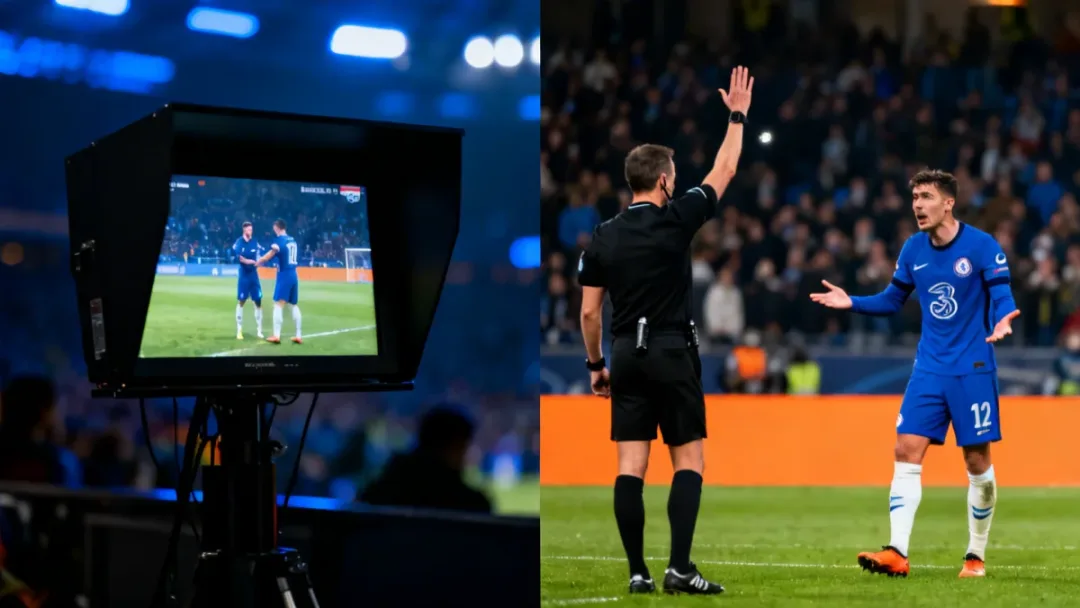
January 2026 saw numerous hotly debated VAR interventions across European football, highlighting ongoing challenges in consistency and interpretation, often altering match outcomes and igniting fan and pundit discussions.
Welcome to Flashinz, your go-to source for in-depth football analysis! In the dynamic world of European football, the Video Assistant Referee (VAR) continues to be a focal point of discussion, often stirring as much passion as the goals themselves. This article delves into Analyzing the 10 Most Controversial VAR Decisions in January 2026 European Matches, examining the incidents that left fans, players, and pundits bewildered, questioning the very essence of fair play and consistency. Prepare to revisit the moments that defined a month of high-stakes football and intense debate.
The VAR Landscape in Early 2026: A Mixed Bag of Emotions
January 2026 proved to be a particularly tumultuous month for VAR across Europe’s top leagues. While designed to eliminate clear and obvious errors, the system frequently found itself at the heart of fresh controversies, leading to widespread frustration. The promised clarity often dissolved into confusion, with decisions appearing inconsistent even within the same league. This period underscored the ongoing struggle to integrate technology seamlessly into the fast-paced, emotionally charged environment of professional football.
Fans and experts alike expressed growing concerns over the subjective nature of some VAR interventions. What one referee deemed a clear error, another might interpret as a marginal call, leading to a perception of arbitrariness. This inconsistency not only impacted individual match results but also began to erode trust in the system’s fundamental fairness. The European leagues, despite their technological advancements, continued to grapple with the human element of interpretation, which remained paramount even with video assistance.
Defining Controversy: What Makes a VAR Decision Debatable?
A VAR decision becomes controversial when it:
- Reverses a clear on-field call without strong visual evidence.
- Involves subjective interpretations of fouls, handballs, or offsides.
- Leads to significant delays that disrupt the game’s flow.
- Appears inconsistent with similar incidents in other matches.
Ultimately, the January 2026 window served as a stark reminder that while VAR aims for perfection, its implementation is far from it, leaving ample room for debate and critical analysis.
Premier League’s Heated Moments: Foul Play or Fair Challenge?
The English Premier League, renowned for its relentless pace and physicality, experienced its fair share of contentious VAR calls in January 2026. These incidents often revolved around the fine line between a legitimate challenge and a foul, particularly in the penalty box. The speed of play often made initial on-field decisions difficult, but even with VAR, consensus remained elusive, fueling heated discussions post-match.
One notable incident involved a late penalty awarded after a VAR review in a crucial top-six clash. The attacking player appeared to initiate contact, yet the VAR deemed it a foul by the defender, leading to a game-deciding spot-kick. This decision sparked outrage from the defending team’s manager, who publicly questioned the interpretation of contact and intent, arguing it undermined the competitive nature of the league.
Key Premier League Incidents
Several moments stood out:
- Manchester United vs. Chelsea: A disallowed goal for offside, where the VAR lines were drawn with millimetric precision, leaving fans questioning the spirit of the rule.
- Liverpool vs. Arsenal: A penalty awarded for a handball that many considered accidental, with the ball deflecting off a defender’s leg before touching their arm.
- Tottenham vs. Manchester City: A red card issued after a VAR review for a challenge initially deemed a yellow, changing the complexion of a tightly contested match.
These decisions highlighted the ongoing tension between the letter of the law and the practicalities of a contact sport, leaving many to wonder if VAR was truly enhancing fairness or simply introducing new layers of complexity.
La Liga’s Offside Ordeals: Inches and Interpretations
La Liga, known for its technical prowess and tactical battles, faced its own set of VAR challenges, primarily centered around offside decisions. The precision required by VAR, often involving intricate line-drawing, frequently led to goals being chalked off for marginal infringements. These calls, while technically correct, often felt harsh to players and fans, particularly when the advantage gained was negligible.
A particularly memorable case involved a goal scored by Real Madrid against Barcelona, initially given, then overturned for an offside offense that was barely perceptible. The forward’s shoulder was deemed to be fractionally ahead of the last defender, leading to the goal’s disallowance. This decision, coming in El Clásico, ignited a firestorm of debate about whether the technology was being overly pedantic, sacrificing the flow and excitement of the game for absolute accuracy.
The Nuances of Offside
The controversy surrounding offside calls often stems from:
- The ‘armpit’ rule: Whether parts of the body that can legally score a goal are advanced.
- The subjective timing of the pass: When exactly the ball leaves the passer’s foot.
- The quality of the VAR technology: Doubts about frame rates and calibration.
These fine margins repeatedly led to crucial goals being disallowed, altering the course of matches and, in some instances, impacting league standings. The debate continued about whether a more ‘common sense’ approach to offside, perhaps with a greater margin for error, would serve the game better.
Serie A’s Penalty Puzzles: Handballs and Contact
In Italy’s Serie A, January 2026 was marked by a series of perplexing penalty decisions, particularly concerning handballs and minimal contact within the penalty area. The interpretation of what constitutes an ‘unnatural position’ for a hand or arm, and the threshold for a foul, continued to be a source of significant contention. VAR interventions in these scenarios often felt inconsistent, leading to frustration among teams and supporters.
One highly discussed incident involved a penalty awarded against Juventus, where a defender’s arm, deemed to be in an unnatural position, made contact with the ball. Many argued that the defender had no time to react and that the proximity of the shot made it unavoidable. However, VAR upheld the on-field decision, leading to a crucial goal for the opposition and a narrow defeat for the Bianconeri.
Handball Interpretations Under Scrutiny
The complexities of handball calls include:
- The distance the ball travels: Was there time to react?
- The position of the hand/arm: Was it ‘unnatural’ or supporting body movement?
- The intent: While intent is generally disregarded, it often influences public perception.
These discussions underscored the ongoing challenge for referees and VAR officials to apply the handball rule consistently, especially when nuances of player movement and ball trajectory come into play. The ambiguity often left teams feeling aggrieved and confused about the precise application of the laws.

Bundesliga’s Red Card Riddles: Intensity vs. Danger
The German Bundesliga, known for its high-intensity football, witnessed several controversial red card decisions via VAR in January 2026. The fine line between aggressive, robust play and genuinely dangerous fouls became a constant point of contention. VAR was frequently called upon to review challenges, often upgrading yellow cards to reds, which significantly impacted team dynamics and match outcomes.
A standout moment occurred during a Bayern Munich match, where a midfielder received a straight red card after a VAR review for a tackle that was initially deemed a yellow. The referee, after consulting the monitor, determined the contact was excessive and endangered the opponent. However, many pundits and fans felt the decision was harsh, arguing it was a committed, albeit strong, tackle that did not warrant a sending off, especially given the context of the game’s intensity.
Evaluating Red Card Offenses
Red card controversies often hinge on:
- The point of contact: Was it high, or on the knee/ankle?
- The force of the impact: Was it reckless or excessive?
- The potential for injury: Did the tackle genuinely endanger the opponent?
These subjective evaluations, even with video evidence, led to differing opinions on whether VAR was correctly identifying dangerous play or inadvertently sanitizing the physicality that is a core part of the Bundesliga’s appeal. The debate highlighted the tension between player safety and the inherent contact nature of football.
Ligue 1’s Phantom Fouls: The Unseen Contact
In France’s Ligue 1, January 2026 brought a series of controversial VAR decisions centered on ‘phantom fouls’ – incidents where minimal or unseen contact led to significant penalties, often disrupting the flow and rhythm of matches. These calls frequently involved attackers going down under slight pressure, with VAR validating the claims despite little clear evidence of a foul that would merit a penalty or free-kick in a dangerous area.
One particularly frustrating instance for a club involved a penalty awarded against them in a crucial fixture, where the VAR review highlighted a barely perceptible touch on the attacker’s ankle. The on-field referee had initially waved play on, but the VAR advised a review, leading to the penalty. This decision was widely criticized for being ‘soft’ and for encouraging simulation, undermining the integrity of the game by rewarding minimal contact.
The Impact of ‘Phantom Fouls’
Such decisions often have several negative consequences:
- Encouragement of simulation: Players may be incentivized to exaggerate contact.
- Frustration for defenders: Making legitimate challenges becomes riskier.
- Disruption of game flow: Frequent stoppages for marginal contact.
Ultimately, these ‘phantom foul’ calls in Ligue 1 contributed to the growing sentiment that VAR was sometimes over-officiating, intervening in situations that were not ‘clear and obvious errors’ but rather subjective interpretations of minor contact, thereby detracting from the natural progression of the game.
The Long-Term Impact of January 2026 VAR Debates
The multitude of controversial VAR decisions witnessed in January 2026 across European football leagues has had a profound and lasting impact on the sport. Beyond the immediate match outcomes, these incidents have intensified the global conversation about the role and effectiveness of technology in football. The month served as a critical period, forcing leagues, referees, and governing bodies to re-evaluate the guidelines and implementation of VAR.
The criticism wasn’t just from disgruntled fans; managers, players, and even former referees voiced concerns about the consistency, speed, and sometimes the very necessity of certain interventions. This collective feedback highlighted a clear need for greater clarity in the laws, more rigorous training for VAR operators, and perhaps a redefinition of what constitutes a ‘clear and obvious error.’ The events of January 2026 underscored that while technology offers precision, the human element of interpretation remains a complex and often divisive factor.
Future Adjustments and Recommendations
- Refine handball rules: Introduce more objective criteria or a greater margin of error.
- Clarify offside interpretations: Consider a ‘daylight’ rule to reduce marginal calls.
- Improve communication: Publicize VAR audio or decision explanations.
- Standardize training: Ensure consistent application of rules across all leagues.
In conclusion, January 2026 will be remembered as a month that solidified the ongoing love-hate relationship with VAR. It exposed the system’s vulnerabilities and the persistent challenges in achieving perfect officiating. The debates sparked during this period are likely to drive significant discussions and potential reforms in how VAR is utilized in the future, aiming to strike a better balance between accuracy and the spirit of the game.
| Key Aspect | Brief Description |
|---|---|
| Inconsistency | VAR decisions often varied across leagues and even within matches, raising questions about fairness. |
| Subjectivity | Interpretations of fouls, handballs, and offsides remained highly subjective despite video evidence. |
| Game Flow Disruption | Frequent and lengthy VAR reviews led to significant stoppages, impacting the match’s rhythm. |
| Trust Erosion | The controversies led to a perceived erosion of trust in VAR’s ability to ensure fair play. |
Frequently Asked Questions About VAR Controversies
Why were VAR decisions in January 2026 considered so controversial?▼Many VAR decisions in January 2026 were controversial due to perceived inconsistencies in application, subjective interpretations of rules, and the fine margins involved in offside or handball calls, leading to significant debate among fans and experts.
Which European leagues experienced the most VAR controversy?▼The Premier League, La Liga, Serie A, and Bundesliga all saw a high number of contentious VAR interventions. Each league had specific types of calls that generated the most debate, such as offsides in La Liga and handballs in Serie A.
Did VAR significantly impact match outcomes during this period?▼Yes, several VAR decisions directly led to disallowed goals, awarded penalties, or red cards that altered the course of matches. These game-changing moments often decided crucial points and impacted league standings.
What are the main criticisms leveled against VAR after January 2026?▼Key criticisms included a lack of consistency, excessive delays disrupting game flow, over-analysis of marginal incidents, and the continued subjectivity in interpreting rules such as handball and foul play.
Are there any proposed changes to VAR following these controversies?▼Discussions are ongoing with governing bodies regarding potential refinements to VAR protocols. These include clearer guidelines for subjective calls, improved communication, and possibly a higher threshold for intervention to reduce marginal and disruptive reviews.
Conclusion
The month of January 2026 will undoubtedly be etched in the annals of European football as a period defined by intense VAR scrutiny and widespread debate. While the intention behind the Video Assistant Referee remains noble – to eradicate clear and obvious errors – its execution frequently left much to be desired, leading to more questions than answers. The controversies highlighted a critical juncture for the sport, emphasizing the urgent need for greater consistency, clearer interpretation of rules, and perhaps a more streamlined approach to its application. As football continues to evolve, the challenge lies in finding a harmonious balance where technology serves to enhance, rather than detract from, the beautiful game.