Unlocking 2026 UEFA Champions League: Tactical Shifts & US Viewers
Advertisements
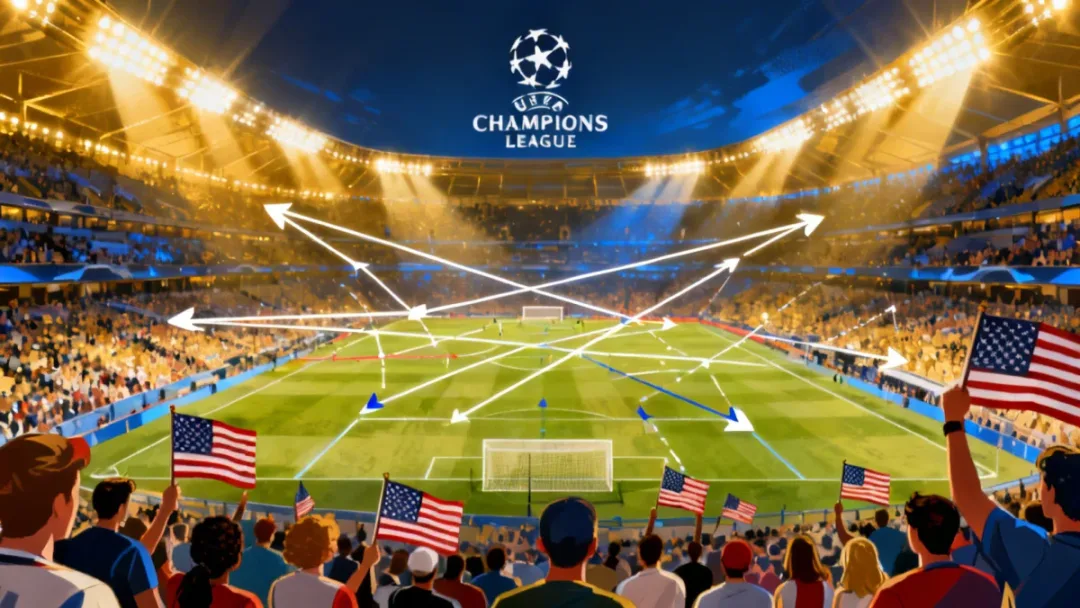
The 2026 UEFA Champions League is set to unveil significant tactical evolutions, influencing how American audiences engage with and interpret the strategic depth of European football.
As the 2026 UEFA Champions League approaches, American football enthusiasts are keenly anticipating not just the spectacle, but also the intricate strategic battles that define European club football. Unlocking the 2026 UEFA Champions League: 5 Key Tactical Shifts Impacting American Viewers will require a deeper understanding of how the game is evolving, moving beyond mere goal counts to appreciate the nuanced tactical decisions that shape every match. This article delves into the critical strategic adjustments that will likely dominate the tournament, offering American fans a richer viewing experience.
The Evolution of Positional Play and Fluid Formations
Positional play, often associated with teams like Pep Guardiola’s Barcelona and Manchester City, continues to evolve, becoming even more sophisticated. By 2026, we anticipate a further blurring of traditional roles, with players expected to be highly adaptable and technically proficient across multiple positions. This fluidity creates dynamic systems that are difficult for opponents to track, leading to more unpredictable and exciting attacking sequences.
The core principle remains creating numerical superiority in specific areas of the pitch, but the methods are becoming increasingly subtle. Instead of rigid formations, teams will deploy systems that can seamlessly transition between defensive solidity and offensive dominance, often within a single passage of play. This means that a ‘winger’ might drop deep to assist in midfield build-up, or a ‘full-back’ could push high to become an auxiliary forward, depending on the phase of play and the opponent’s setup.
Adaptability in Player Roles
- Hybrid Players: Expect more players who excel in multiple positions, capable of performing defensive, midfield, and attacking duties.
- Rotational Movement: Teams will emphasize constant movement and interchange of positions to disorient defensive structures.
- Overload Principles: Creating numerical advantages in key areas of the pitch to facilitate ball progression and chance creation.
For American viewers, understanding this fluidity requires a shift from focusing solely on individual brilliance to appreciating collective movement and spatial awareness. The beauty lies in the intricate dance of players exchanging positions, creating passing lanes, and exploiting momentary gaps. The 2026 Champions League will likely be a masterclass in this evolving tactical philosophy, where the collective intelligence of a team often outweighs individual star power.
The Resurgence of the High Press and Counter-Pressing Intensity
The high press is far from a new concept, but its application has become more refined and relentless. By 2026, top European teams will deploy highly coordinated pressing schemes, aiming to win the ball back high up the pitch immediately after losing possession. This ‘gegenpressing’ or counter-pressing reduces the opponent’s time on the ball and prevents them from building attacks, often leading to quick transitions and scoring opportunities.
The intensity and organization of these pressing traps will be crucial. Teams will train extensively to ensure every player understands their role in the press, from the initial trigger to the subsequent closing down of passing lanes. This requires exceptional physical conditioning and tactical discipline, as a single player breaking formation can compromise the entire structure.
The goal is not just to win the ball, but to win it in dangerous areas, close to the opponent’s goal. This tactical approach demands a constant output of energy and mental focus, making matches incredibly fast-paced and physically demanding. American viewers, accustomed to high-tempo sports, will find this aspect particularly engaging, as it directly translates into more offensive action and dramatic turnovers.
Key Elements of Modern Pressing
- Trigger Recognition: Players are trained to identify specific cues (e.g., a poor pass, a player receiving with his back to goal) to initiate the press.
- Cover Shadows: Using one player’s body position to block multiple passing options, forcing the opponent into predictable moves.
- Quick Transitions: Immediately attacking once possession is regained, capitalizing on the opponent’s disorganization.
The success of a high press hinges on collective effort and precision. When executed flawlessly, it can suffocate opponents and dictate the tempo of the game. The 2026 Champions League will undoubtedly feature teams that have mastered this art, turning defensive actions into potent attacking weapons.
Data-Driven Decision Making and Set-Piece Innovation
The role of data analytics in football continues to expand exponentially. By 2026, every tactical decision, from player recruitment to in-game adjustments, will be heavily influenced by sophisticated data models. This means coaches will have unprecedented insights into opponent tendencies, player performance metrics, and the effectiveness of various tactical approaches. American viewers, familiar with advanced statistics in their domestic sports, will appreciate this scientific approach.
Furthermore, set-piece routines are becoming an increasingly vital aspect of tactical planning. No longer seen as mere opportunities for a scramble, corners and free-kicks are meticulously designed using data to exploit defensive weaknesses. Teams will employ complex movements, blocks, and screening plays to create goal-scoring chances from dead-ball situations, turning set pieces into highly choreographed offensive plays.
Impact of Analytics and Set-Piece Strategy
The integration of data analytics allows coaches to fine-tune strategies based on objective metrics rather than solely on intuition. This scientific rigor extends to player assessment, identifying strengths and weaknesses that might not be immediately apparent to the naked eye. This leads to more optimized team selections and game plans.
- Expected Goals (xG) Analysis: Beyond simply tracking shots, xG helps evaluate the quality of chances created and conceded.
- Opponent Vulnerability Mapping: Data highlights specific areas where opponents are weakest in defending set pieces or open play.
- Creative Set-Piece Routines: Teams will employ decoy runs, zonal overloads, and pre-planned movements to maximize set-piece effectiveness.
For American viewers, this means that even seemingly mundane aspects of the game, like a corner kick, will carry significant tactical weight. The detailed planning behind these moments adds another layer of appreciation for the strategic depth of the sport, moving beyond the immediate outcome to the underlying design.
The Rise of Defensive Specialization and Adaptive Marking
While offensive tactics often grab headlines, defensive strategies are undergoing a quiet revolution. By 2026, we expect to see highly specialized defensive roles and more adaptive marking schemes. This involves not just man-marking or zonal marking, but a hybrid approach that switches between the two based on the opponent’s movement and the ball’s position. Defenders will need to be incredibly intelligent and versatile.
Individual defensive prowess will be complemented by collective defensive intelligence. Teams will focus on denying space in critical areas, forcing opponents into less dangerous zones, and quickly transitioning from defense to attack. The art of defending will be less about brute force and more about anticipation, positioning, and intelligent communication.
Sophisticated Defensive Approaches
Modern defending emphasizes proactive disruption rather than reactive containment. Teams aim to prevent dangerous situations from developing, often by cutting off supply lines to key attacking players or by forcing opponents into wide, less threatening areas of the pitch.
- Hybrid Marking: Seamlessly transitioning between man-to-man and zonal marking based on the opponent’s attacking phase.
- Defensive Blocks: Forming compact, organized defensive shapes that are difficult to penetrate centrally.
- Pressing Triggers in Defense: Initiating collective pressure when opponents enter specific defensive zones or make certain passes.
American viewers will witness defenses that are more than just a backline; they are integrated units working in concert to nullify threats. The tactical battle often begins here, with teams trying to break down highly organized and intelligent defensive structures, making the eventual breakthrough even more satisfying.
The Impact of Squad Depth and Rotational Strategies
With the increasing demands of modern football, including congested fixture lists and the need to compete on multiple fronts, squad depth and intelligent rotation have become paramount. By 2026, managers will rely heavily on a deep roster of high-quality players, allowing them to rotate their squads without a significant drop in performance. This strategy is crucial for maintaining player fitness, preventing injuries, and keeping the entire squad motivated.
The ability to rotate effectively means that teams can adapt their tactics to specific opponents or game situations by bringing in players with different skill sets. A manager might opt for a more defensive midfielder against a strong attacking side, or a pacy winger to exploit a slow full-back. This tactical flexibility, enabled by squad depth, will be a defining characteristic of successful Champions League campaigns.
Strategic Rotation Benefits
- Injury Prevention: Managing player workload reduces the risk of fatigue-related injuries.
- Tactical Flexibility: Allows for varied game plans and adaptations to different opponents or in-game scenarios.
- Player Motivation: Ensures all squad members feel valued and have opportunities to contribute.
For American viewers, this means that the ‘starting XI’ is just one piece of the puzzle. The strength of the bench and the manager’s ability to effectively utilize their entire squad will be key determinants of success. Understanding these rotational strategies adds another layer of appreciation for the managerial chess match unfolding over a long season and intense tournament.
Technological Integration and Real-Time Adjustments
The intersection of technology and football tactics will be more pronounced than ever by 2026. Real-time data streams, advanced communication systems, and even AI-powered analytics will allow coaches to make instantaneous tactical adjustments during matches. This means that game plans are no longer static but are constantly evolving based on what is happening on the pitch and the performance metrics being generated.
Coaches will have access to heatmaps, passing networks, and defensive pressure maps in real-time, enabling them to identify weaknesses, exploit opportunities, and communicate changes to players with unprecedented speed. This technological edge can be a significant differentiator in high-stakes Champions League encounters, where small adjustments can alter the outcome.
Advanced Tools for In-Game Management
The ability to analyze and react to game dynamics as they unfold is a game-changer. Technology provides coaches with the objective evidence needed to validate or alter their strategic approaches, moving beyond subjective assessments.
- Wearable Tech: Provides real-time physical performance data, informing substitution decisions.
- Positional Tracking: Offers insights into player movement, spatial awareness, and tactical adherence.
- AI-Driven Insights: Predictive analytics can suggest optimal tactical changes based on current game state and historical data.
American viewers will witness a more dynamic and responsive form of football, where tactical battles are fought not just on the training ground but also in real-time during the match. The strategic depth will be enhanced by this immediate feedback loop, making every moment of the game potentially decisive.
| Key Tactical Shift | Impact on American Viewers |
|---|---|
| Fluid Formations | Increased dynamic play, requiring appreciation of player versatility and collective movement. |
| High Pressing | Faster pace, more turnovers, and direct attacking opportunities from regaining possession high up. |
| Data-Driven Decisions | Enhanced strategic depth, with every decision backed by analytics, similar to US sports. |
| Squad Depth & Rotation | Greater tactical flexibility and sustained high performance across a demanding schedule. |
Frequently Asked Questions About 2026 Champions League Tactics
How will fluid formations impact goal scoring in the 2026 Champions League?▼Fluid formations are expected to increase goal-scoring opportunities by creating more unpredictable attacks and numerical overloads in dangerous areas. Defenders will struggle to track constantly interchanging players, leading to greater space and clearer chances in the final third.
Will the high press make games more physically demanding for players?▼Absolutely. The relentless nature of the high press and counter-pressing demands exceptional physical conditioning and stamina from players. It requires constant sprints, quick recoveries, and intense closing down, significantly increasing the physical toll of each match.
How can American viewers better appreciate data-driven tactical decisions?▼American viewers can enhance their appreciation by familiarizing themselves with key football metrics like Expected Goals (xG) and progressive passes. Observing how substitutions or formation changes align with these statistics during commentary can reveal the coach’s data-informed strategy.
What role will defensive specialization play in deciding Champions League winners?▼Defensive specialization will be crucial. Teams with highly intelligent and adaptive defenders, capable of executing complex hybrid marking schemes, will be better equipped to neutralize elite attacking threats. A strong, tactically astute defense often forms the bedrock of a successful campaign.
How does squad depth influence a team’s chances of winning the Champions League?▼Squad depth is paramount for Champions League success. It allows managers to rotate players, manage fatigue, prevent injuries, and adapt tactics to specific opponents. A deep, talented squad ensures consistent performance across demanding domestic and European schedules, which is vital for winning.
Conclusion
The 2026 UEFA Champions League promises to be a showcase of evolving tactical ingenuity, offering American viewers a deeper and more engaging football experience. From fluid formations and relentless pressing to data-driven strategies and sophisticated defensive schemes, the beautiful game is becoming increasingly nuanced. By understanding these five key tactical shifts, fans can move beyond simply watching the ball to appreciating the strategic mastery that underpins every pass, tackle, and goal. This deeper insight will not only enrich the viewing experience but also foster a greater appreciation for the tactical brilliance inherent in Europe’s premier club competition.